Branding
Abundant Intelligences Branding
Role
Project Manager, Researcher and Graphic Designer
Collaborators
Tarcisio Cataldi, Julia Fortin and Kimiora Whaanga
Client
Abundant Intelligences
Industry
Research
Year
2024
Supported the design team across both Aotearoa and Canada to develop a visual identity system that was co-created with five Indigenous communities across the world.
Problem :
Abundant Intelligences is a Canada-based initiative dedicated to empowering Indigenous communities to engage with AI on their own terms. Through five research pods across Canada, Hawai‘i, Aotearoa, and the United States, communities are developing culturally grounded AI solutions rooted in their own knowledge systems. The challenge was to create a platform that could authentically represent each community while celebrating the collective strength and diversity of Indigenous intelligence.
Solution :
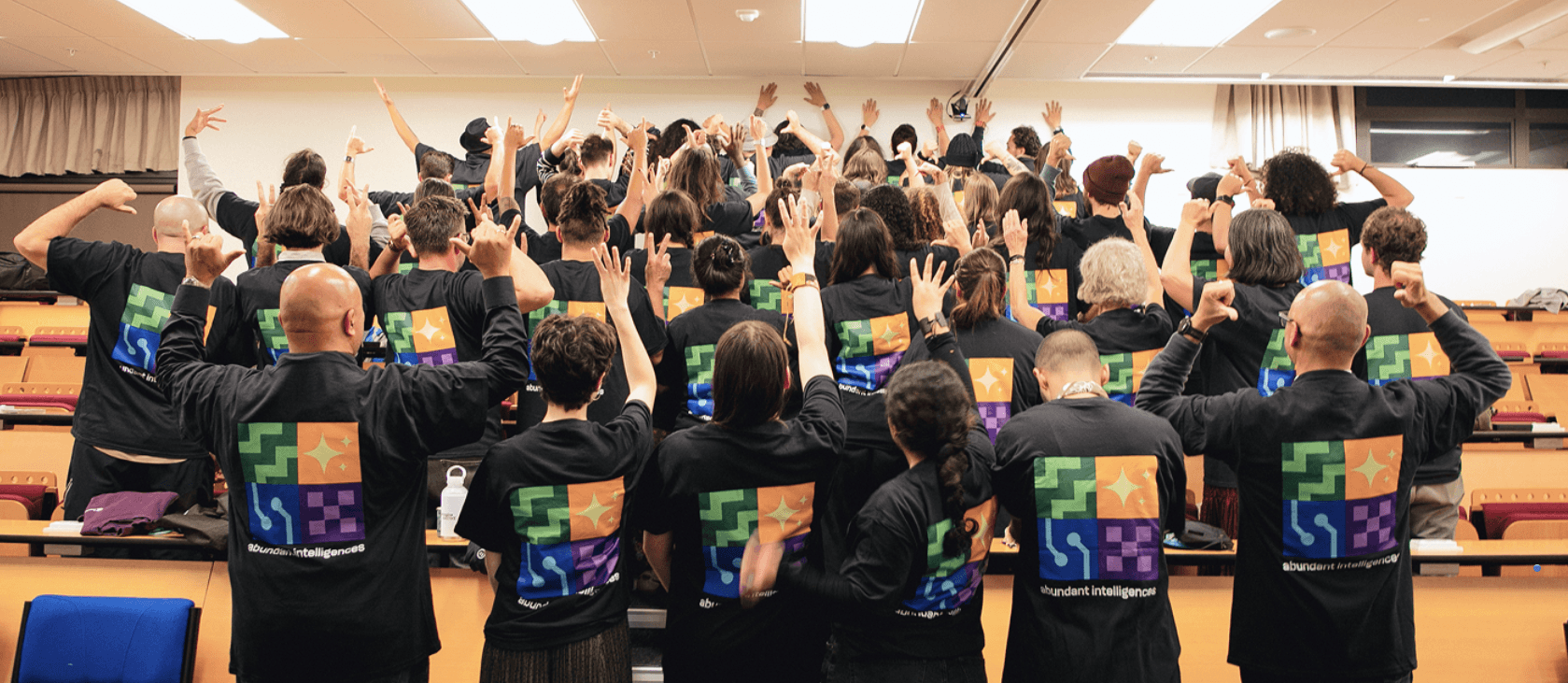
From the outset, we were intentional about avoiding a singular brand identity that would homogenise diverse Indigenous cultures into one visual symbol. Each research pod carries its own distinct history, worldview, and cultural depth, and it was critical that the identity system reflected that richness rather than flattening it. Instead of creating a fixed brand, we developed a flexible visual framework that empowered each community to shape and contribute to the global identity in a way that felt authentic and self-determined.
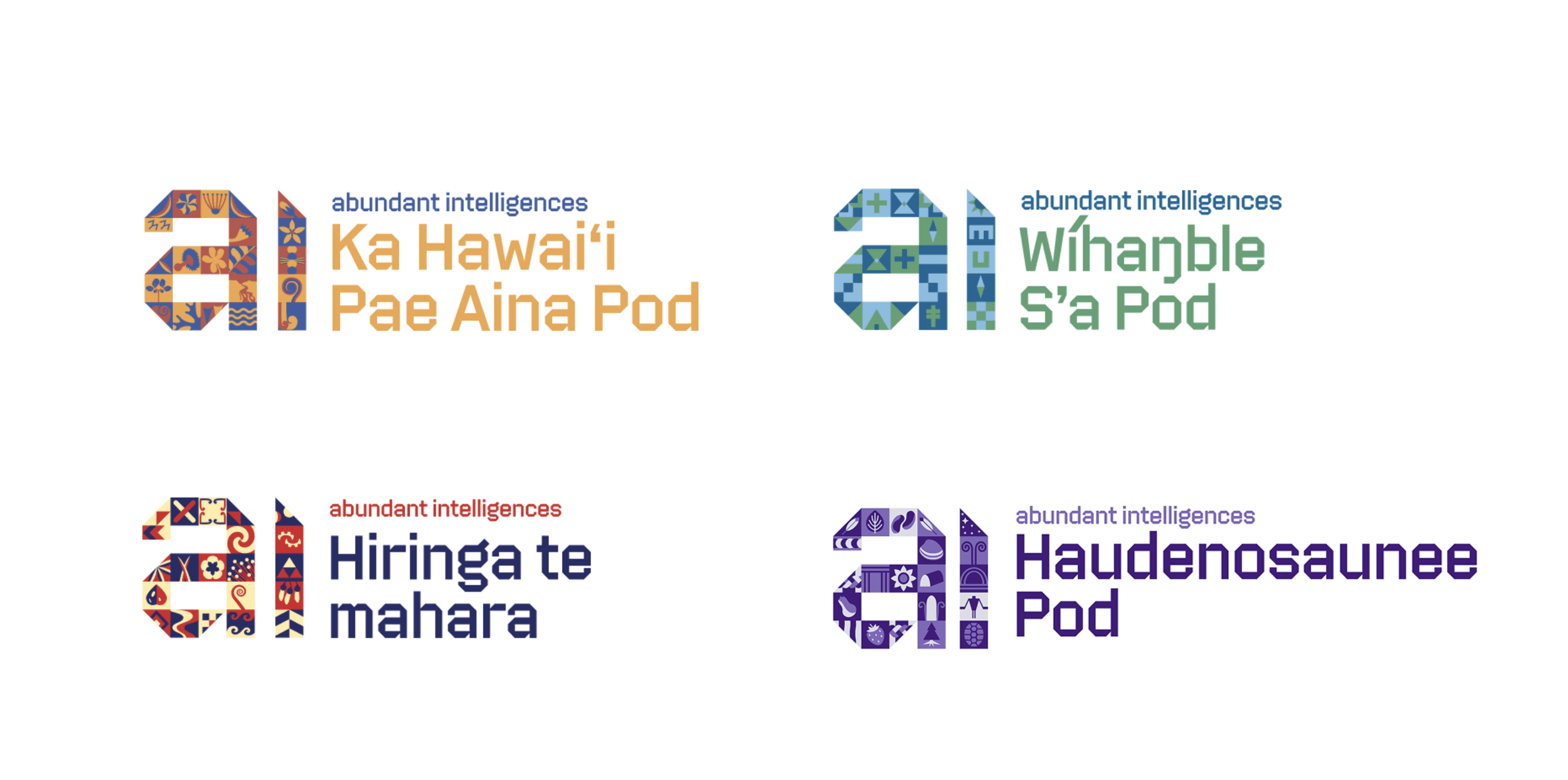
In partnership with Indigenous Design and Innovation Aotearoa (IDIA), we collaborated closely with the Abundant Intelligences design team to establish an adaptable global identity system. This co-design process engaged each research pod — Haudenosaunee (Kanien'kehá:ka), Niitsitapi (Blackfoot), Hiringa te Mahara (Aotearoa), Wihanble S’a (Lakota), and Ka Hawai‘i Pae ‘Āina (Hawai‘i) — ensuring the overarching visual language could hold space for local expression while maintaining collective coherence.
Challenge :
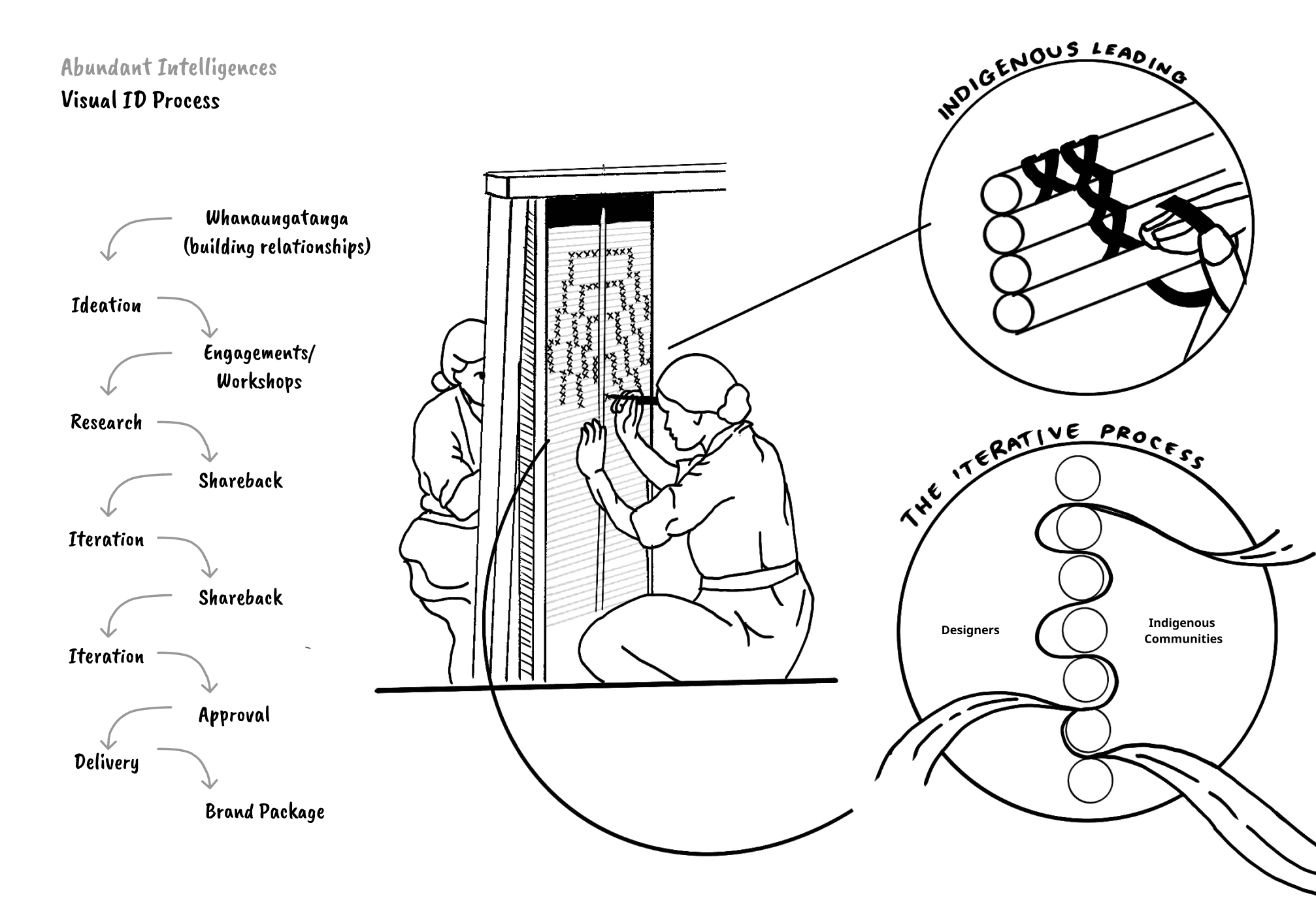
One of the main challenges of this project was designing a brand identity for Indigenous communities outside of my own. I focused on leading the team in ways that respected each community’s culture and avoided appropriation. Our design team included both Indigenous and non-Indigenous designers, and as one of the Indigenous designers, I guided the project’s design approach to ensure all team members worked with care and intention.
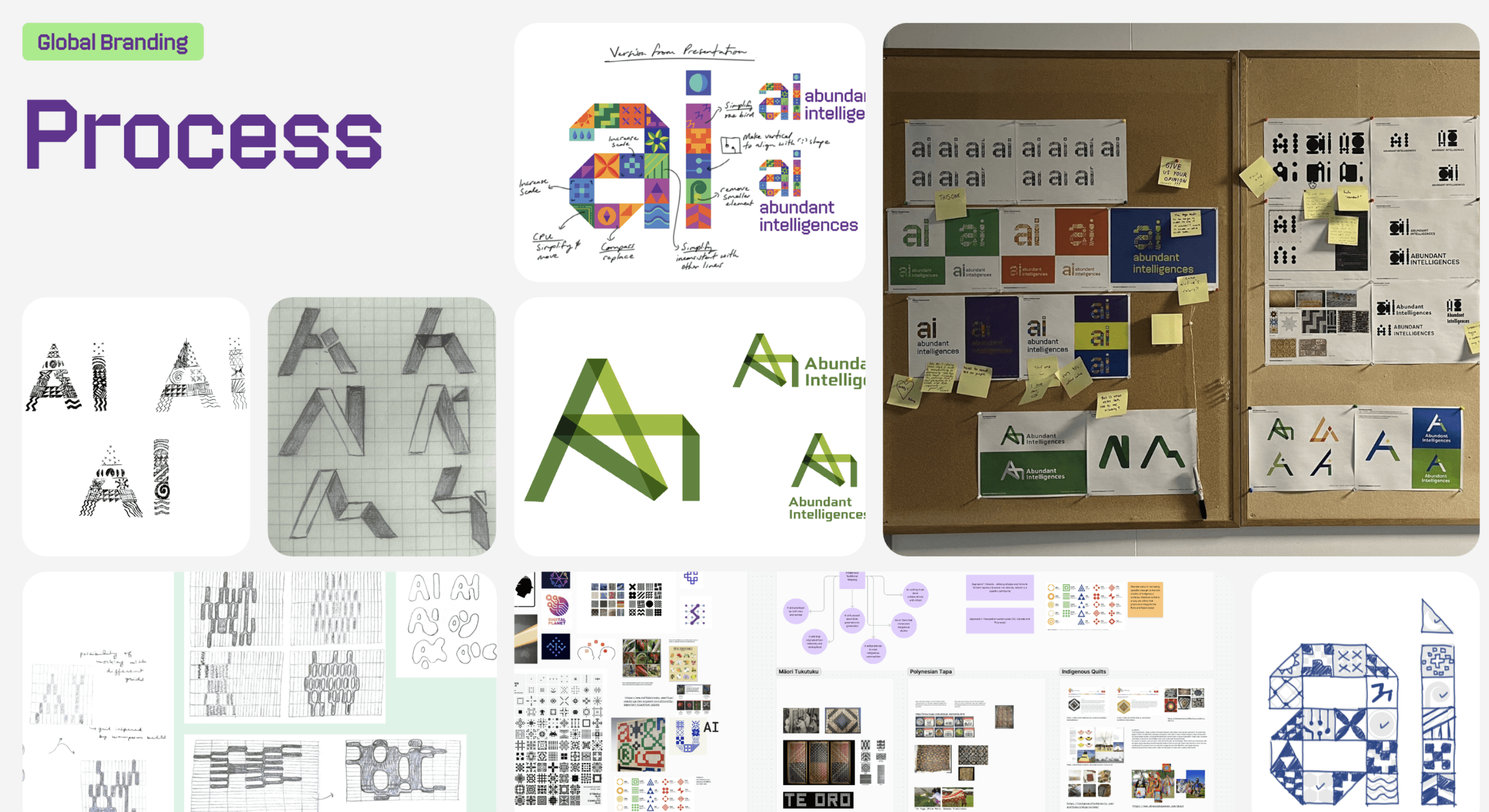
I developed design principles grounded in Kaupapa Māori values, which shaped how designers engaged with communities and traditional knowledge. we created a design framework that prioritised building strong relationships with each community and advocated for them to lead the development of their own logos. This approach allowed them to embed their own traditional practices to collaboration such as elder workshops, narrative building and story-telling.
As a collective we wrote a publication talking more in-depth about the design process. When it's released i will link that publication here.




Summary :
Through conversations each community talked about the importance of oral storytelling and how their art practices speak to their intelligence, resilience and grounding. We wanted to highlight a common art practice in most Indigenous cultures - Weaving.
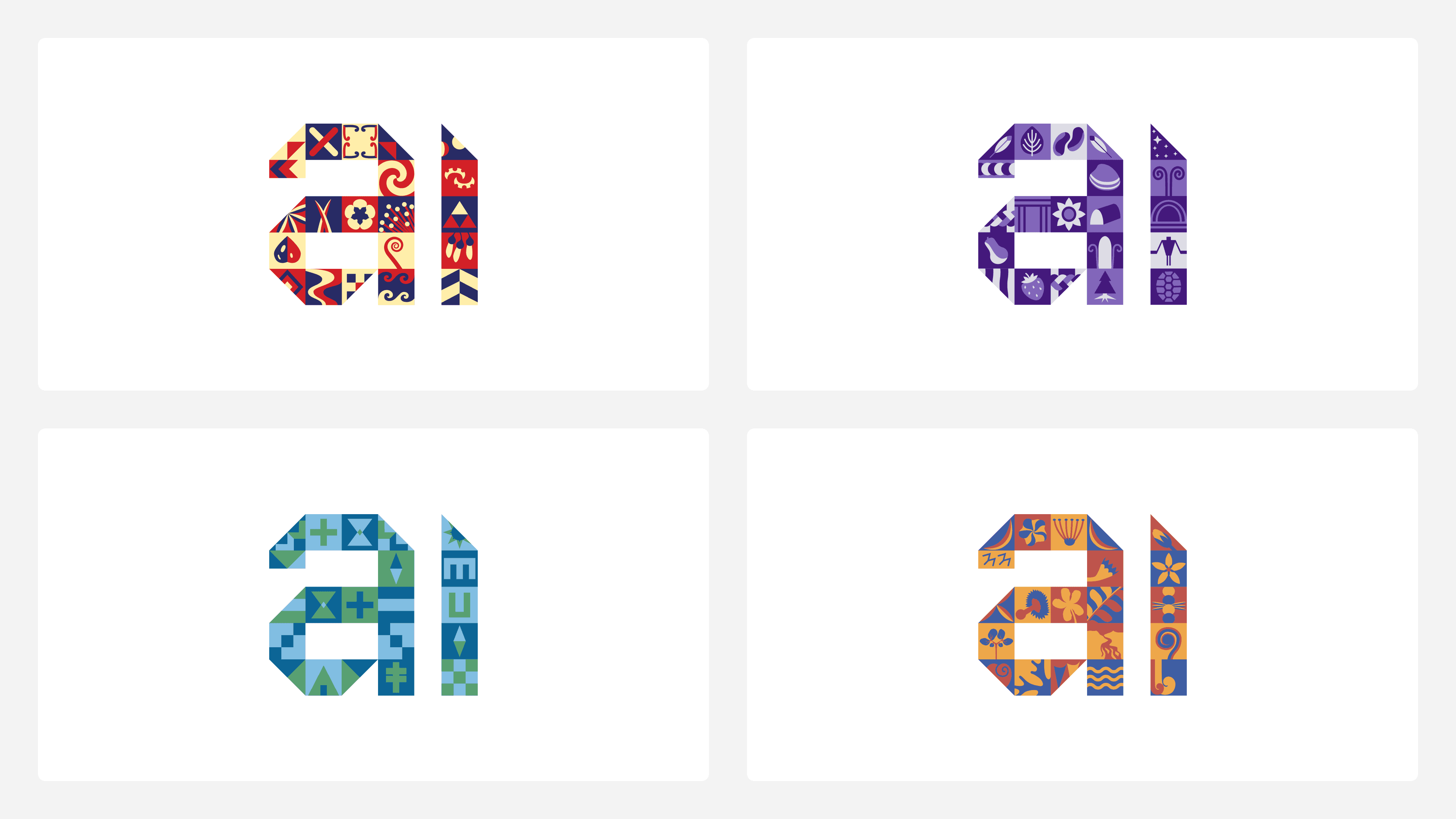
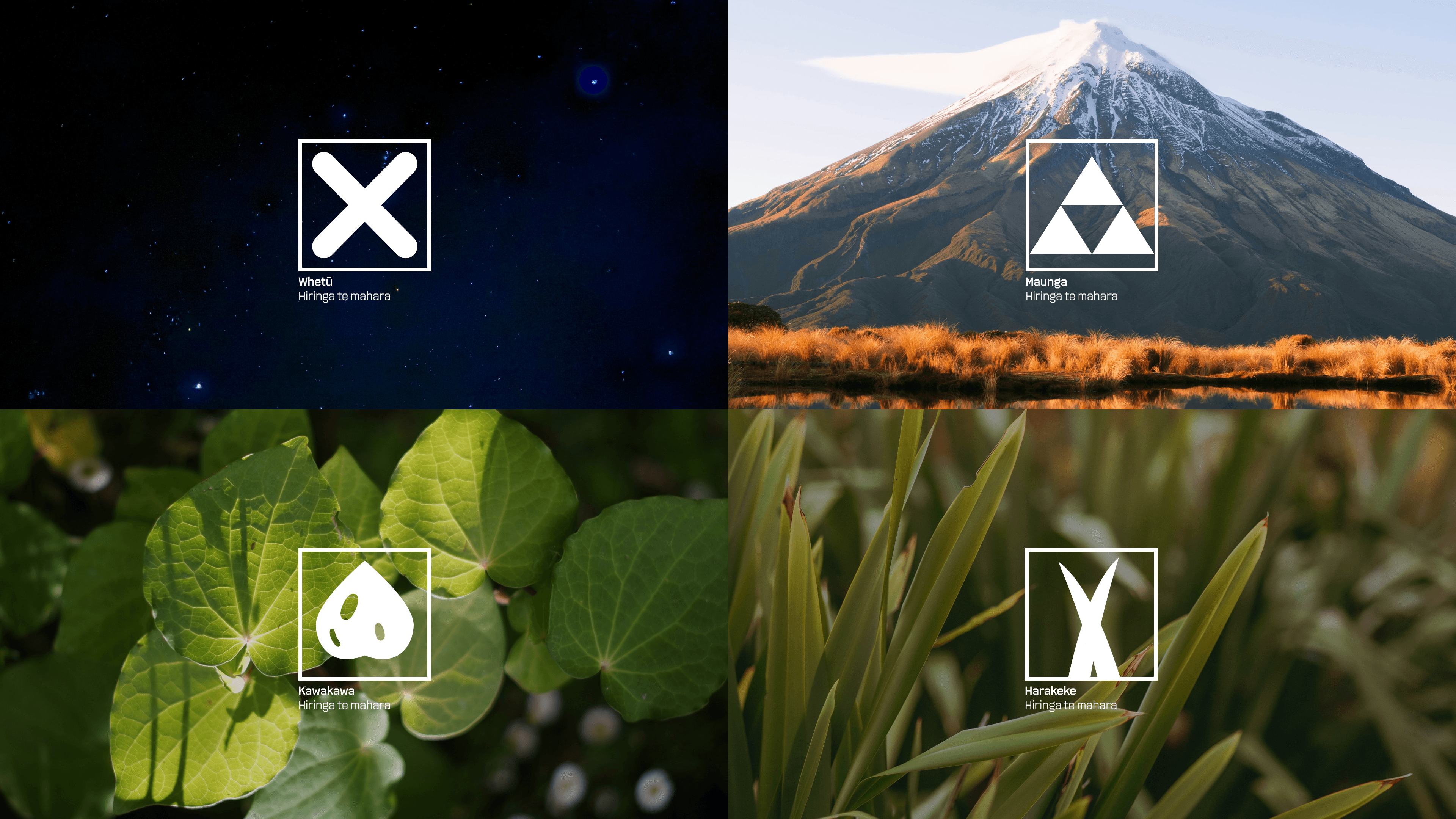
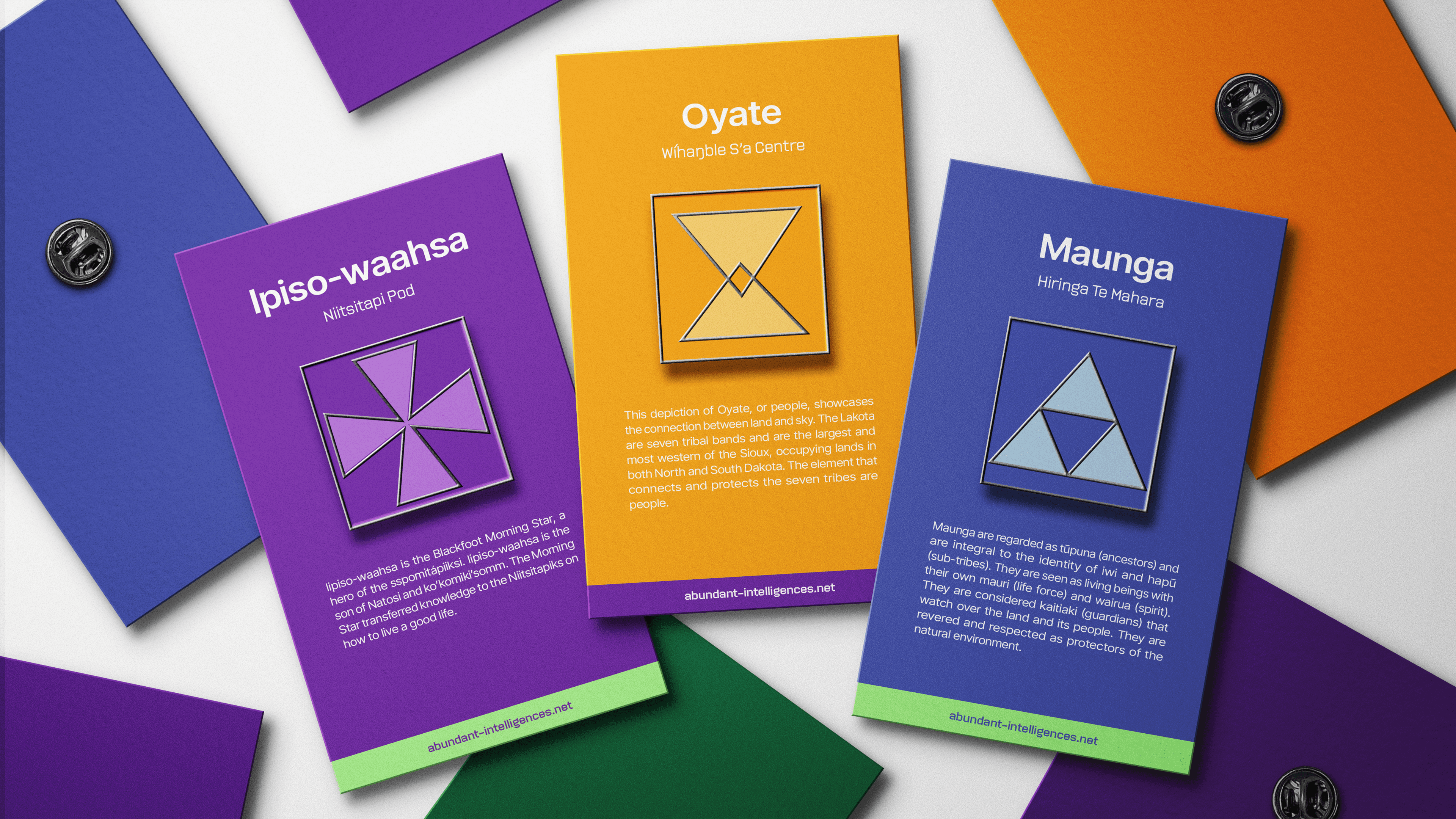
This visual identity draws inspiration from the art of weaving—a practice deeply embedded in many Indigenous cultures and used as a visual record of living in harmony with the environment. Honouring this tradition of storytelling through pattern, we developed a global logo composed of 21 modular tiles, each representing the abundance and distinctiveness of the Indigenous research pods involved in the program. As well as four other logos for each pod that shares their narrative in their way. As the program grows, the logo is designed to evolve—welcoming new tiles that reflect the identities and contributions of future pods.